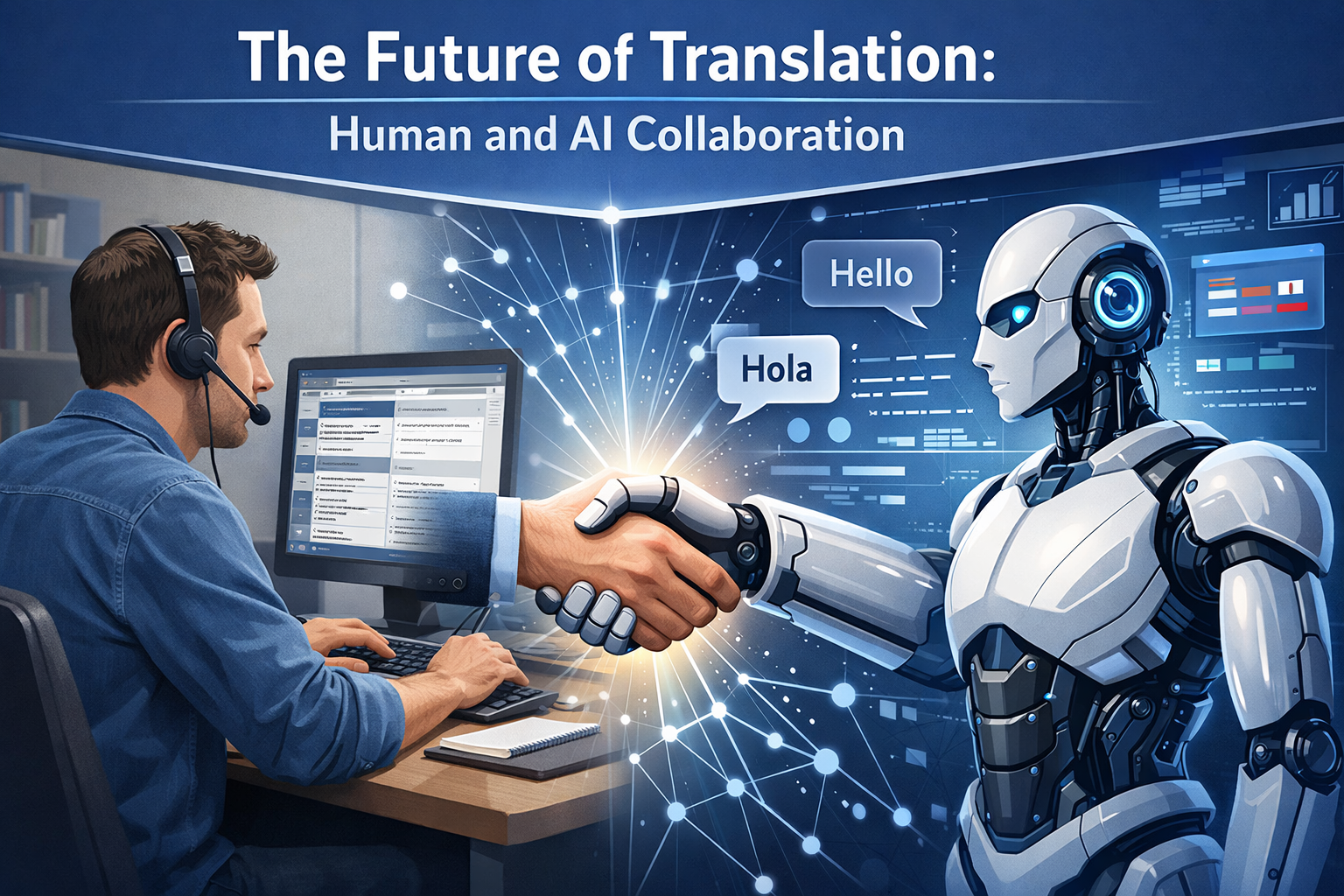
The translation industry stands at a crossroads. As artificial intelligence continues to advance at an unprecedented pace, professional translators worldwide are asking a crucial question: Will AI technology render human translation obsolete? This comprehensive analysis explores the real impact of AI on translation jobs, separating fact from fiction while providing actionable insights for translators navigating this transformative era.
The Current State of AI Translation Technology
Machine translation has evolved dramatically over the past decade. Neural Machine Translation systems, introduced around 2016, marked a significant leap forward from earlier statistical methods. Tools like Google Translate, DeepL, and ChatGPT can now process vast amounts of text in seconds, delivering translations that appear surprisingly fluent at first glance.
According to recent research from Oxford University analyzing U.S. labor market data from 2010 to 2023, regions with higher adoption of Google Translate experienced measurably slower growth in translator employment. The AI software market for translation services is projected to grow from over $126 billion in 2025 to an estimated $1.3 trillion by 2029, reflecting massive investment in this technology.
However, impressive growth statistics tell only part of the story. While AI translation excels at processing high volumes of straightforward content, it continues to struggle with nuance, context, cultural sensitivity, and specialized terminology that professional translators handle routinely.
Real Impact on Translation Professionals
The impact of AI on translators varies significantly depending on specialization, language pairs, and market segments. A 2024 survey by the UK's Society of Authors revealed that more than one-third of translators had lost work due to generative AI, with 43% reporting decreased income. Recent surveys in 2025 show that 84% of translators predict continued decline in demand for traditional translation services.
Many translators report dramatic changes to their workflows. Freelancers working on general content or less specialized materials have experienced the most significant disruption. Some professionals describe losing 50-70% of their income as clients shift to AI-powered solutions for basic translation needs. The emergence of Post-Editing Machine Translation as a standard service offering has created pressure on rates, with many agencies expecting translators to refine AI output at reduced compensation.
Yet this picture is not uniform. Translators specializing in technical, medical, legal, or creative fields continue to find steady work. Industries requiring precision and accountability—such as pharmaceuticals, aerospace engineering, or legal contracts—still rely heavily on human expertise. The emotional resonance and cultural adaptation required for marketing, literature, and entertainment content remains beyond AI's current capabilities.
Why AI Cannot Fully Replace Human Translators
Despite remarkable advances, AI translation faces fundamental limitations that preserve the need for human expertise:
Cultural and Contextual Understanding
Language is deeply intertwined with culture. Idioms, humor, historical references, and social conventions vary enormously across cultures and cannot be effectively translated through literal word substitution. AI systems lack lived experience and cultural intuition, making them prone to awkward or offensive translations when cultural sensitivity matters most.
Specialized Domain Knowledge
Technical translation in fields like medicine, law, engineering, or finance requires deep subject matter expertise. Professional translators often hold advanced degrees or certifications in their specialization, enabling them to understand complex concepts and render them accurately in another language. AI systems may recognize terminology but struggle to grasp the underlying concepts or catch subtle errors that could have serious consequences.
Quality Assurance and Accountability
High-stakes content demands accountability. When translation errors in medical instructions, legal documents, or safety procedures could lead to harm, organizations require qualified professionals who can be held responsible for their work. AI systems lack judgment, cannot assess risk, and provide no meaningful recourse when errors occur.
Creativity and Emotional Intelligence
Translation of creative works—literature, marketing campaigns, video games, film subtitles—requires creativity and emotional intelligence. Effective localization adapts not just words but tone, humor, and cultural references to resonate with target audiences. This creative adaptation remains distinctly human work.
The Evolving Role of Professional Translators
Rather than eliminating translation jobs entirely, AI is reshaping the profession. The most successful translators in 2026 are adapting by:
Specializing in High-Value Niches: Focusing on specialized domains where expertise commands premium rates—medical, legal, technical, or creative translation where AI cannot match human performance.
Mastering Post-Editing Skills: Developing expertise in efficiently reviewing and improving machine-generated translations. While rates for post-editing are typically lower, professionals who excel at this work find consistent opportunities.
Leveraging AI as a Productivity Tool: Using AI for initial drafts, terminology research, or handling repetitive elements while focusing human effort on complex or nuanced content.
Building Direct Client Relationships: Moving away from translation agencies and platforms toward direct relationships with end clients who value quality and are willing to pay for expertise.
Diversifying Services: Expanding into related areas like localization consulting, cultural adaptation, terminology management, or content creation for multilingual audiences.
Tools That Support Professional Translators
Modern translators rely on specialized software to manage their work efficiently. Computer-Assisted Translation tools combine translation memories, terminology databases, and quality assurance features to increase consistency and productivity.
One valuable tool for translators working with SDL Trados files is the SDL Studio Converter from Linigu. This free online converter allows translators to quickly convert SDL Trados Studio project packages, translation memories, and XLIFF files into more accessible formats like Word or Excel. With free registration, translators can instantly view converted files without needing SDL Trados installed, making collaboration and file sharing significantly more efficient.
Tools like these demonstrate how technology can enhance rather than replace professional translation work—streamlining workflows while keeping human expertise at the center of the translation process.
Market Outlook and Job Opportunities
While some segments of the translation market face disruption, global demand for professional translation services continues to grow. International business expansion, regulatory requirements for multilingual documentation, and the explosion of digital content across languages create sustained need for skilled translators.
Emerging opportunities include:
• Localization of software, applications, and digital products for global markets
• Medical and pharmaceutical translation supporting international clinical trials and regulatory submissions
• Legal translation for cross-border transactions, immigration, and international litigation
• Creative adaptation of entertainment content—video games, streaming services, literature
• Remote interpretation services for virtual meetings, telemedicine, and international conferences
Practical Strategies for Translator Career Resilience
Translators concerned about AI's impact can take concrete steps to strengthen their careers:
Invest in Specialized Knowledge: Pursue certifications, advanced education, or deep experience in specific industries where domain expertise creates competitive advantage.
Develop Technical Proficiency: Master professional CAT tools, learn about AI capabilities and limitations, and stay current with technological developments in the field.
Build a Strong Professional Brand: Establish expertise through content creation, professional networking, and thought leadership that demonstrates unique value.
Cultivate Direct Client Relationships: Focus on building trust with clients who understand and appreciate the value of human expertise.
Join Professional Communities: Participate in translator associations and networks that provide advocacy, continuing education, and collective strength.
Practice Financial Resilience: Diversify income sources, build financial reserves, and plan for market fluctuations that are part of freelance professional life.
Conclusion: A Future Shaped by Both AI and Human Expertise
The question is not whether AI will make translators unemployed, but how the profession will evolve alongside advancing technology. Evidence suggests that while AI is disrupting certain segments of the translation market—particularly high-volume, low-complexity work—it is simultaneously creating new roles and opportunities for skilled professionals.
The translators most at risk are those treating translation as a commodity service with no specialized expertise. Conversely, professionals who combine linguistic skill with domain knowledge, cultural intelligence, and technological proficiency are well-positioned to thrive.
AI excels at processing large volumes of straightforward content quickly and inexpensively. Humans excel at understanding context, grasping nuance, exercising judgment, and creating meaning that resonates across cultures. The future belongs to translators who embrace technology while focusing on the distinctly human capabilities that machines cannot replicate.
As we move through 2026 and beyond, successful translation professionals will be those who view AI not as an existential threat but as a powerful tool that, when combined with human expertise, enables higher quality work at greater scale. The profession is not disappearing—it is transforming, demanding adaptation, specialized knowledge, and a clear-eyed understanding of where human value lies.
For translators willing to evolve with their industry, the future holds not unemployment but opportunity—the chance to focus on the most challenging, creative, and meaningful translation work while leaving routine tasks to machines. That future requires intentional skill development, strategic positioning, and confidence in the irreplaceable value of human communication across languages and cultures.
Need to convert SDL Trados files quickly?
Try the free SDL Studio Converter from Linigu
Convert .sdlppx, .sdlrpx, .sdltm, and more to Word or Excel instantly

Comments ()
No comments yet. Be the first to comment!