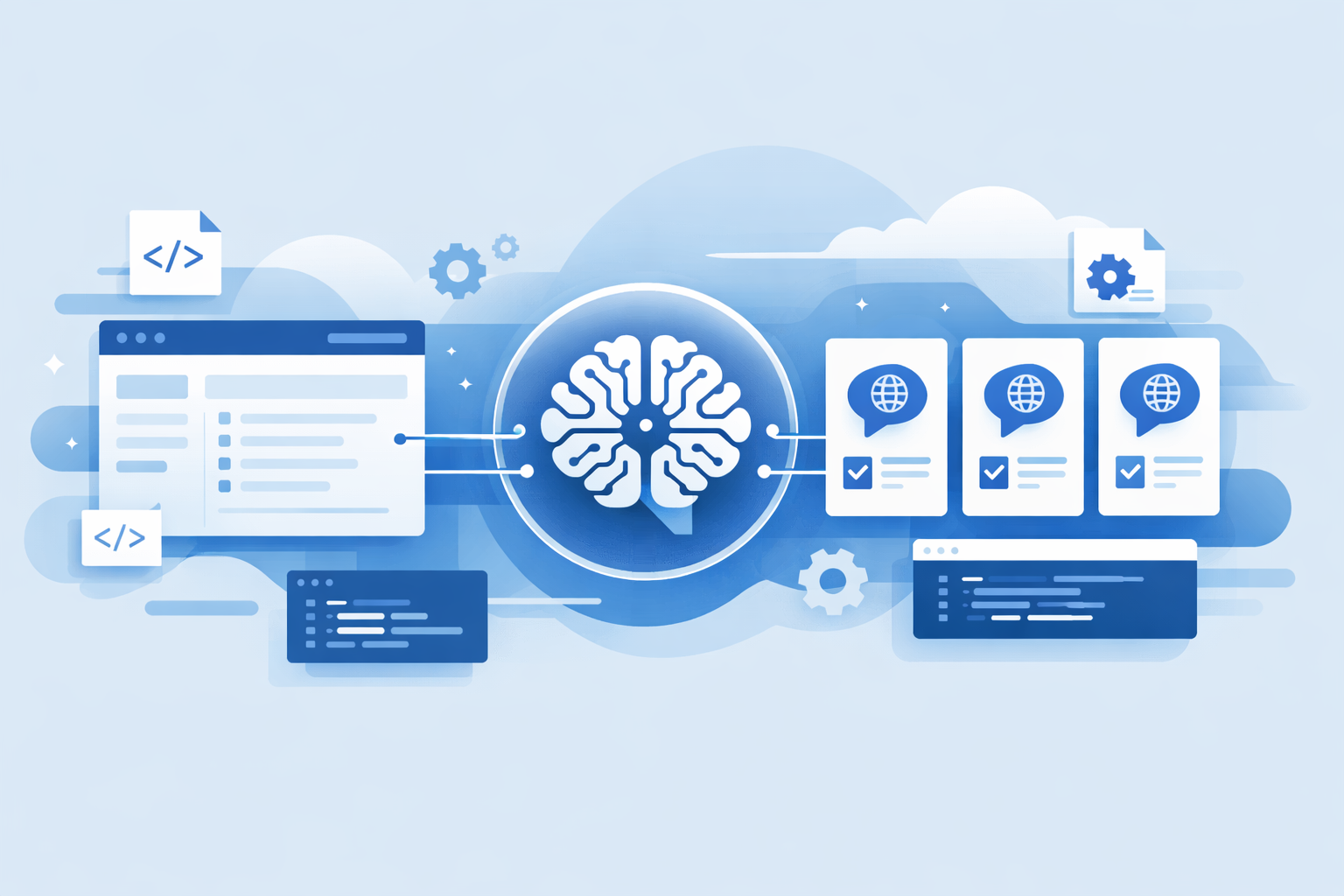
In today’s digital world, launching a product in only one language is no longer enough. Users expect applications, websites, and platforms to speak their language — both linguistically and culturally. This is where AI localization comes in.
What Is AI Localization?
AI localization is the process of adapting digital content into multiple languages using artificial intelligence while preserving technical structure, context, and usability. Unlike basic machine translation, AI localization understands that software content is not just text, but structured data.
Traditional localization methods often rely on manual processes, spreadsheets, or static translation tools. These approaches are slow, error-prone, and difficult to scale. AI localization, on the other hand, automates the entire workflow — from detecting translatable content to delivering ready-to-use language files.
How AI Localization Works
At its core, AI localization involves several intelligent steps:
-
File Structure Analysis
AI systems analyze language files such as JSON, YAML, XML, XLIFF, CSV, or PO files. Keys, variables, placeholders, and syntax are detected and protected. -
Contextual Understanding
Instead of translating strings in isolation, AI evaluates how text is used within the interface. This reduces ambiguity and improves accuracy. -
Parallel Multilingual Translation
AI can generate translations for multiple target languages simultaneously, ensuring consistency across all outputs. -
Change Detection
One of the biggest advantages of AI localization platforms like Lingiu.Cloud is smart change detection. Only modified strings are retranslated, preventing unnecessary rework.
Why Traditional Localization Falls Short
Manual localization workflows often involve copying text into spreadsheets, sending it to translators, and reintegrating the output. This process introduces risks such as:
-
Broken syntax
-
Lost placeholders
-
Inconsistent terminology
-
High costs and long turnaround times
AI localization eliminates these issues by working directly with structured files and maintaining their integrity throughout the process.
How Lingiu.Cloud Improves AI Localization
Lingiu.Cloud is designed specifically for technical and software localization. Instead of treating content as plain text, it treats it as structured data.
Key advantages include:
-
Support for modern development file formats
-
Preservation of variables and code elements
-
Fast, scalable multilingual processing
-
Cost-efficient pay-per-use model
This makes Lingiu.Cloud suitable for developers, startups, SaaS platforms, and localization professionals who need speed without sacrificing quality.
When Should You Use AI Localization?
AI localization is ideal when:
-
You manage large or frequently updated projects
-
You work with structured language files
-
You need consistent terminology across languages
-
You want to reduce costs and manual effort
By combining automation with contextual intelligence, AI localization enables teams to focus on product development instead of translation logistics.


Comments ()
No comments yet. Be the first to comment!