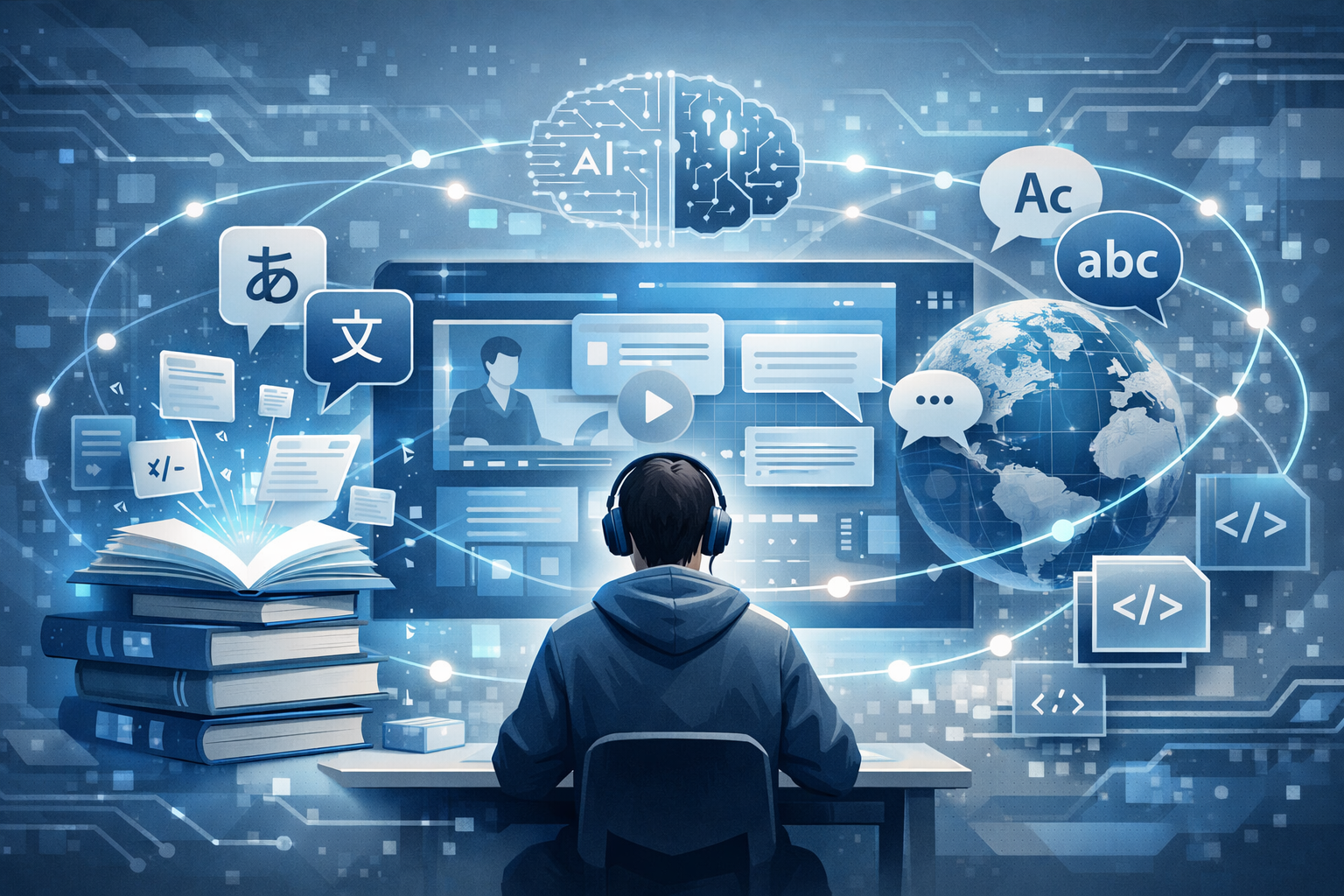
AI translation is often discussed in the context of speed and efficiency, but its role in language learning is equally important. Modern learners no longer rely solely on textbooks — they interact with multilingual digital content every day.
AI Translation as a Learning Aid
AI translation helps learners understand unfamiliar languages by providing immediate contextual meaning. Instead of memorizing isolated vocabulary lists, users encounter words in real usage scenarios such as interfaces, documentation, and applications.
This exposure accelerates learning by reinforcing:
-
Word patterns
-
Sentence structure
-
Contextual usage
Context Matters in Learning
One of the most powerful aspects of AI translation is context awareness. Poor translations can confuse learners and reinforce incorrect patterns. Platforms like Lingiu.Cloud focus on preserving contextual integrity, making translations more reliable learning references.
Learning Through Repetition and Consistency
Consistency is critical in language learning. AI-powered systems maintain uniform terminology across projects, which helps learners recognize repeated structures and phrases. This repetition strengthens memory and understanding.
AI Translation vs Traditional Learning Methods
Traditional language learning often separates theory from practice. AI translation bridges this gap by integrating learning directly into real-world content. Learners interact with authentic language instead of artificial examples.
Lingiu.Cloud’s Educational Value
Lingiu.Cloud provides learners with exposure to professionally structured multilingual content. Whether analyzing software interfaces or documentation, users gain insight into how language functions in practical environments.
This makes AI translation not just a tool for output, but a powerful learning companion.

Comments ()
No comments yet. Be the first to comment!